

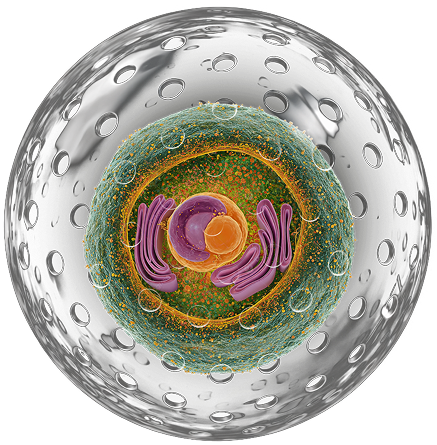
Keeps the contents inside
The capsule keeps the cell and its nucleic acids inside. Nothing is lost or transferred to another capsule at any point in the protocol.
Semi-permeable capsules · Single-cell analysis
Atrandi Biosciences is a Lithuanian company developing technologies for single-cell analysis. Its semi-permeable capsules (SPC) enclose each cell separately while letting reagents pass in and out. This means you can run an entire protocol on a single cell, which existing technologies do not allow. The portfolio comprises three platforms (Flux, Onyx and Styx) and application kits.
Atrandi Biosciences builds tools for laboratories that are running into the limits of today's single-cell technologies. The goal is simple: bring standard laboratory chemistry and hundreds of thousands of parallel reactions into a single experiment at the level of individual cells.
The portfolio is built on two ways of separating cells: the company's own semi-permeable capsules (SPC) and droplet microfluidics. These are complemented by three instrument platforms that make the technologies accessible for everything from routine research to large-scale screening.
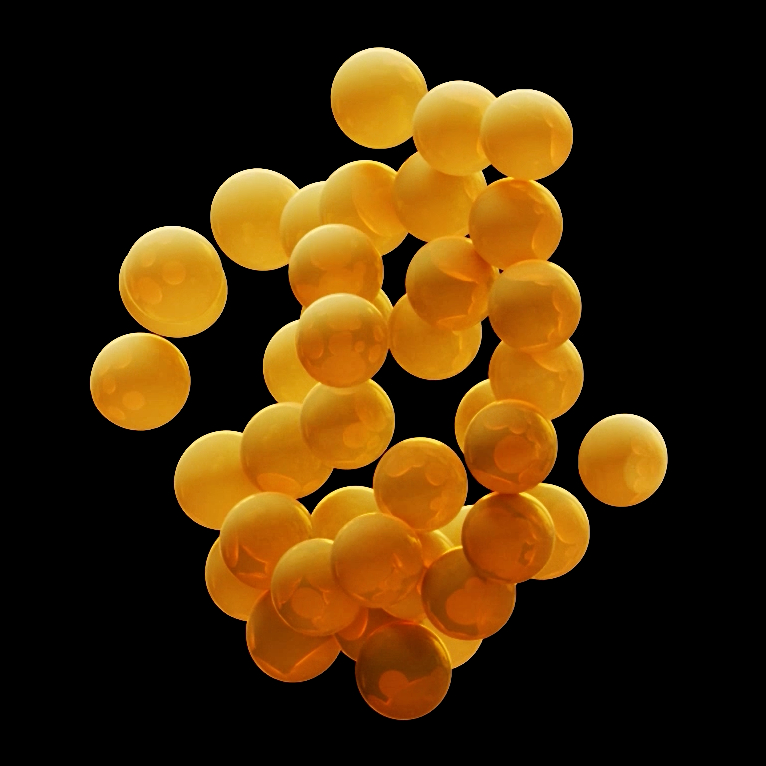
Each cell is enclosed in its own semi-permeable microcapsule. The capsule keeps the cell and its nucleic acids inside but lets reagents pass in and out. A complete multi-step protocol, including lysis, reverse transcription, PCR and ligation, can therefore run on a single cell without the samples mixing.
In droplet microfluidics, each reaction takes place in a separate droplet in oil and reagents cannot be exchanged during the protocol. In a plate format, the number of samples is limited by the number of wells. Capsules sit between the two: standard chemistry, single-cell resolution and hundreds of thousands of cells per run.
The capsule keeps the cell and its nucleic acids inside. Nothing is lost or transferred to another capsule at any point in the protocol.
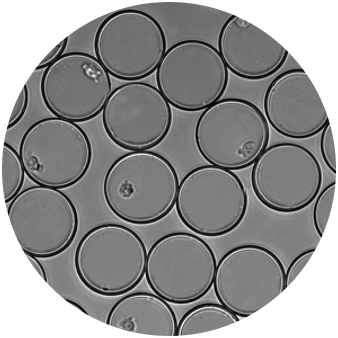
Tens to hundreds of thousands of cells side by side, each in its own capsule. The number of samples grows while the resolution stays the same.
Reagents pass through the membrane in both directions, so several chemical steps can run in sequence on the same cell. Droplet platforms cannot do this.
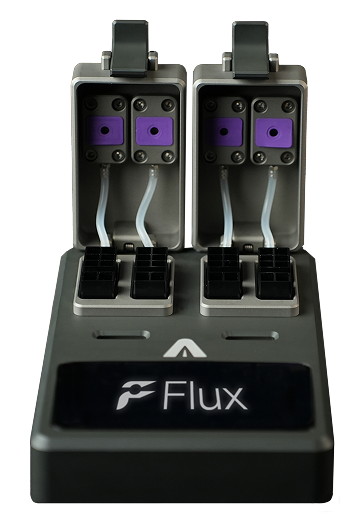
A platform for working with semi-permeable capsules. It scales from tens to hundreds of thousands of cells per run, is simple to operate and runs on ready-made application kits, so there is no chemistry to optimise yourself.
Use cases: Reading DNA and RNA together from a single cell, microbial genomics.
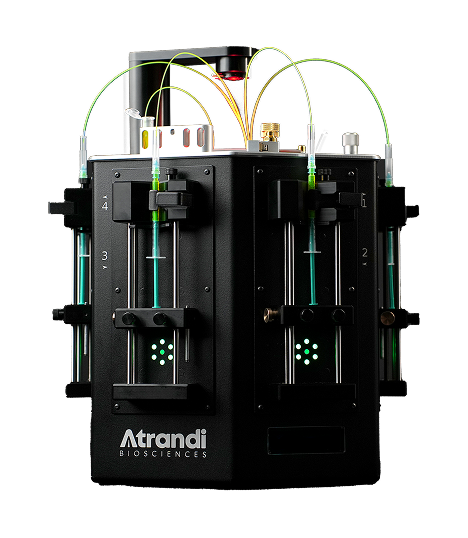
A high-throughput workstation that handles both capsules and droplet microfluidics. It gives you full control over the chemistry and over how cells are separated, so you can also build your own protocols on it.
Use cases: Custom protocols, droplet workflows, combinations of both technologies.
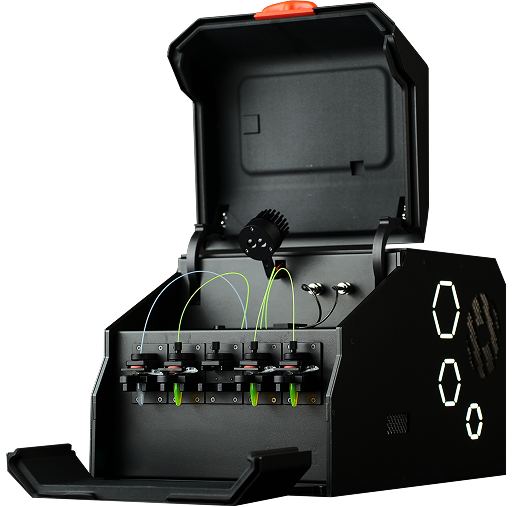
A high-throughput platform for droplet microfluidics: droplet generation, screening and sorting.
Use cases: Large-scale screening, droplet sorting, functional genomics.
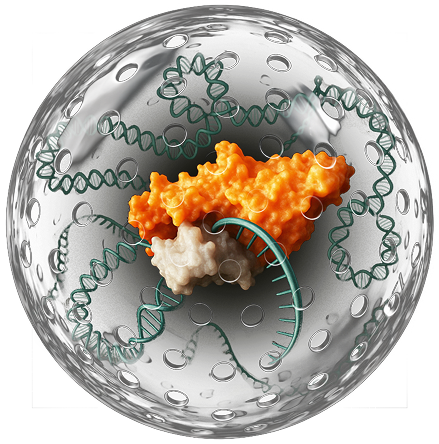
Genome and transcriptome from the same cell in a single protocol. This reveals the link between a cell's genetic make-up and how it responds, without the need to split the sample.
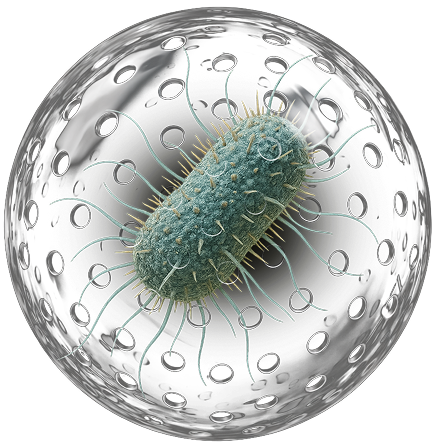
Sequencing the genomes of individual bacteria without cultivation. This uncovers differences between strains that merge into a single signal in bulk analysis.
Method development laboratories build their own multi-step protocols in capsules, using chemistry that other formats cannot handle.
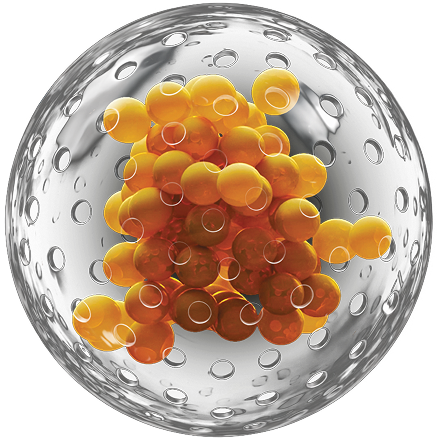
Cells can be cultivated directly in capsules. This is useful for functional screening, clonal expansion and the study of species that are difficult to culture by conventional methods.
Droplet-based screens for drug discovery, functional genomics and directed enzyme evolution.
We will help you choose a platform based on your application, sample type and number of samples. We can arrange a non-binding consultation, a demo run and a pilot study.