Genome and epigenome from one sample
Variants, CNVs, methylation and hydroxymethylation from the same library. The sample does not have to be split between parallel protocols.
Six bases · NGS multiomics
biomodal is a British biotechnology company. It develops the duet multiomics solution, a workflow that reads both the four canonical DNA bases (A, C, G, T) and epigenetic modifications from a single library, with 5mC and 5hmC resolved separately. It does not use bisulfite conversion and works with DNA input from 5 ng.
Genetic and epigenetic information is usually obtained through three parallel routes: WGS for variants, bisulfite sequencing for methylation and oxBS for hydroxymethylation. biomodal replaces them with a single sample-to-sequencer workflow. The result is a six-base genome from one library, one flow cell and one bioinformatics analysis.
For the laboratory, this means more data from the same sample and less handling of the DNA. It also makes it possible to work with inputs from 5 ng, where a bisulfite protocol would damage the template or would not be sufficient.
The duet™ multiomics solution is an enzymatic protocol that does not damage DNA. It records the state of modified cytosine during library preparation, at single-base resolution. The finished library runs on standard short-read sequencers. The bioinformatics then returns, for each position, the canonical base and, separately, its methylation or hydroxymethylation state.
Unlike bisulfite sequencing, there is no extensive DNA damage, so the workflow can handle very low inputs, cfDNA and FFPE material. And unlike standard EM-seq, it also distinguishes 5mC from 5hmC, without a second parallel run.
Variants, CNVs, methylation and hydroxymethylation from the same library. The sample does not have to be split between parallel protocols.
The enzymatic approach is gentle on DNA. A usable library can be prepared from 5 ng of input, including from cfDNA and FFPE material.
Neither bisulfite nor standard EM-seq can tell the two cytosine modifications apart. biomodal separates them at single-base resolution.
The library runs on standard short-read sequencers, with no special chemistry, flow cells or instruments.
One run instead of three parallel protocols means lower costs for reagents, sequencing and technician time.
The modality XPLR software processes six-base data from raw reads through to annotated methylation sites.
A short video from biomodal shows the principle of the six-base workflow, from library preparation to data analysis.
Simultaneous detection of driver mutations, copy-number changes and the tumour methylation signature, from a single FFPE or fresh sample.
cfDNA in plasma: low inputs, fragmented DNA and the ability to capture the epigenetic signature of the tissue of origin.
5hmC is highly enriched in brain tissue and changes in both Alzheimer's and Parkinson's disease. biomodal can map it reliably.
Epigenetic clocks built on 5mC and 5hmC. More accurate estimates of biological age and of response to intervention.
Fetal cfDNA in maternal plasma. Combining genetic and methylation signals increases detection sensitivity.
Analysis of cfDNA fragment sizes and end motifs, for early detection and tissue-of-origin determination.
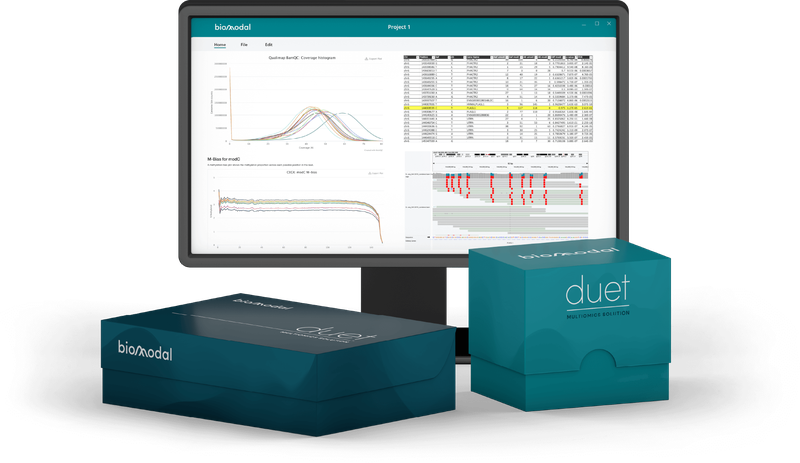
Full six-base sequencing: the four canonical bases plus 5mC and 5hmC, resolved separately. Standard input. For WGS, methylome and hydroxymethylome from a single run.
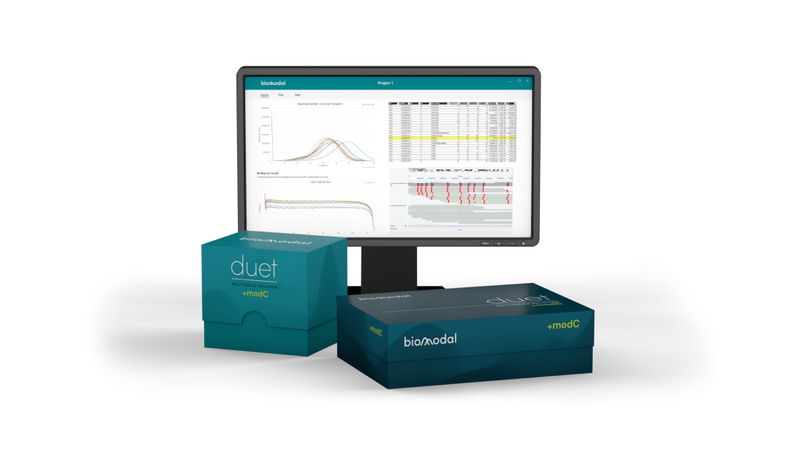
A lower-cost option: the four canonical bases and total modified cytosine. It makes sense where you do not need to distinguish 5mC from 5hmC.
A kit range optimised for cfDNA from blood plasma. It reads genetic, epigenetic and fragmentomic information from the same cfDNA molecule in a single, automation-ready workflow. The +modC version reads total modified cytosine; the 6-base version distinguishes 5mC and 5hmC.
A tool for processing six-base data, from raw reads to annotated methylation sites. The modality Viewer component is currently in beta.
Adapted protocols and panels for specific applications, from target enrichment to projects with their own sequencing requirements.
We will go through the technical requirements, sample parameters and integration into your short-read sequencing workflow. The consultation is non-binding and available in the Czech Republic and Slovakia, and we can offer a kit to try.