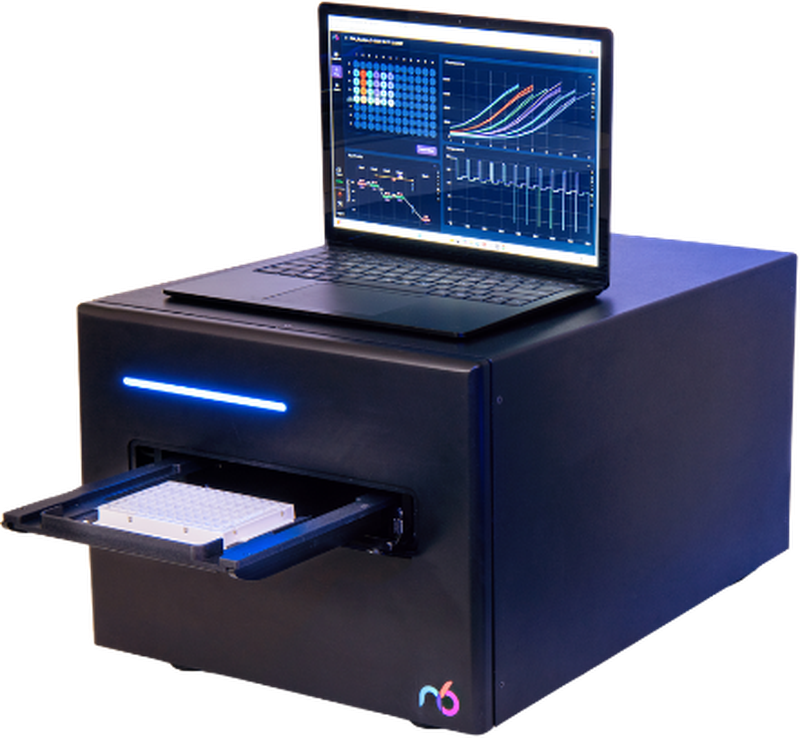
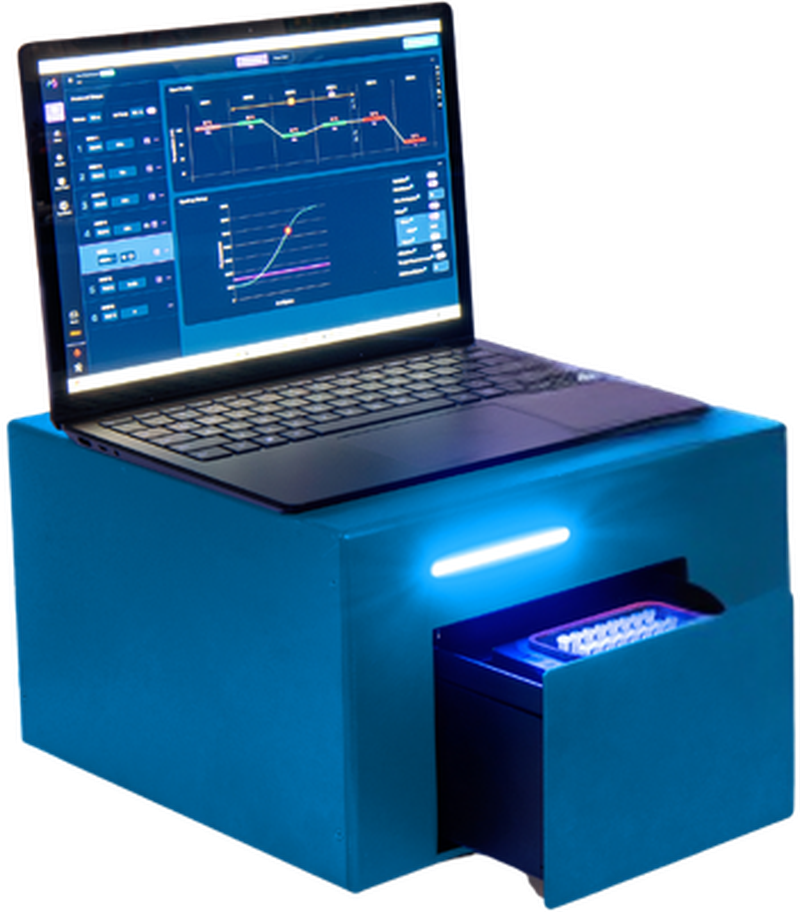
N6 iconPCR — independently controlled amplification in every well
N6 Tec manufactures a thermocycler that controls amplification in each well independently while the reaction is running. AutoNorm technology replaces a fixed number of cycles, reduces chimeras caused by over-amplification and eliminates the separate quantification and normalisation step. It works with standard NGS library preparation kits, so you are not tied to a single supplier.
iconPCR changes the way NGS libraries are amplified
N6 Tec is a US biotechnology company that develops instruments for NGS library preparation. Its core technology is iconPCR, a thermocycler with the AutoNorm system. AutoNorm monitors amplification in each well individually and stops the reaction once the sample reaches its target concentration. This removes the need for a fixed number of cycles across the whole plate.
In practice, this means fewer chimeras, more uniform output across samples and higher success rates with low-input and degraded material such as FFPE and cfDNA. Quantification and normalisation take place directly in the thermocycler. Applications are broad: whole-genome and exome sequencing, RNA sequencing, single-cell methods, 16S metagenomics, targeted oncology panels and the development of new assays.
How iconPCR works
Take a look at AutoNorm technology
A short video from N6 explains how real-time, per-well amplification control changes the library preparation workflow.
AutoNorm technology
Feedback-controlled amplification per well, not per plate
A conventional thermocycler runs every well through the same number of cycles. AutoNorm reverses this: each well has its own detector and its own end point. The reaction stops as soon as the sample is ready.
Per-well optimisation
Each sample receives as many cycles as its starting concentration requires. Higher-input samples stop earlier, while low-input samples run longer. All finish at a comparable concentration, and there are no plate-to-plate differences.
Normalisation directly in the instrument
Because the instrument measures continuously, samples come out already normalised. Manual quantification on a Qubit or TapeStation, dilution and a second measurement are no longer needed. A single reaction yields a library ready for pooling.
Fewer chimeras and artefacts
The reaction is stopped before it reaches the plateau phase. This reduces chimeras from over-amplification, duplication artefacts and the bias that would otherwise distort variant calling and expression data. Libraries are more consistent across runs, regardless of who prepared them.
Rescuing difficult samples
FFPE, cfDNA and single-cell material need more cycles than standard inputs. AutoNorm recognises this automatically, so there is no need to optimise the cycling profile separately for each sample type.
Applications
Where iconPCR shortens the path to data
16S metagenomics
Amplification of 16S rRNA regions with uniform depth across samples, without the plate-to-plate differences that otherwise distort diversity results. It also works for full-length 16S on PacBio, as validated in a USDA publication.
Low inputs and degraded material
FFPE, cfDNA and highly degraded ancient DNA: material that standard PCR protocols sometimes struggle with. AutoNorm increases run success rates and reduces the number of repeats.
Whole-genome and exome sequencing
Library preparation with normalisation in every well. Finished libraries go straight into the pool without a separate qPCR measurement.
RNA sequencing
Uniform amplification preserves the relative proportions of transcripts. This means less bias in expression profiles and in differential expression analysis. It also works with small RNA libraries.
Single-cell RNA sequencing
Low inputs from individual cells often need more cycles. AutoNorm handles this automatically, without manual optimisation for each cell population.
Assay development and validation
Validation of new index sets, primers and complete assays. Real-time data show how the chemistry performs, well by well.
N6 instruments
Two iconPCR formats: same technology, different capacity
96-well platform
icon96
Format:
96 wells (standard full-skirt plate)
Volume:
10–100 µl
AutoNorm monitors all 96 wells individually
Automation-ready: REST API and unattended operation for integration into a robotic line
Standard 96-well plate, compatible with the consumables you already use
Aimed at genomics cores, academic sequencing centres, contract laboratories and larger facilities
Typical use:
Whole-genome sequencing, RNA sequencing, metagenomics, targeted oncology panels, population genomics
Compact 16-well instrument
icon16
Format:
16 wells (2 × 8 wells, proprietary N6 format)
Volume:
10–100 µl
The same AutoNorm technology as the icon96
Designed for manual work, no robot required
Compact dimensions, fits on a standard laboratory bench
Aimed at smaller research groups, translational research and clinical research programmes
Typical use:
Single-cell RNA sequencing, spatial transcriptomics, cfDNA and minimal residual disease, rare diseases, assay development
Let's get started
Interested in iconPCR for your laboratory?
We can demonstrate the instrument live, go through the savings compared with your current workflow and arrange an evaluation on your own samples. The consultation is non-binding and available in the Czech Republic and Slovakia.