
Less ligation bias
A single adapter and circularisation instead of ligating two adapters whose efficiency depends on the sequence.
RNA fragmentomics · small RNA
RealSeq Biosciences develops NGS library preparation kits for small RNAs and RNA fragments. Instead of two adapters, it uses a single adapter and circularisation, which greatly reduces ligation bias. The libraries are ready for Illumina sequencers.
RealSeq Biosciences is a US company founded in 2019. It focuses on RNA fragmentomics: the analysis of small RNAs and RNA fragments that standard library preparation kits capture only in part.
RealSeq kits prepare libraries for Illumina sequencers from tissues, cells, biofluids and environmental samples. They are used in oncology, infectious disease and agriculture.
RiboMarker® is an NGS library preparation kit for comprehensive RNA profiling. It captures small RNAs such as miRNAs and siRNAs, as well as lncRNA, mRNA and tRF/tDR fragments shorter than 100 nt. It works with low RNA input and with low-RIN samples.
Standard small RNA kits capture only molecules with 5′-P and 3′-OH ends, typically miRNAs. These make up about 10% of the small RNAs in a sample. According to the manufacturer, RiboMarker® also captures the remaining 90% that standard workflows miss.
RiboSpike is a mix of 20 oligonucleotides 20–60 nt long. It is used for normalisation, checking length-dependent capture and workflow quality control.
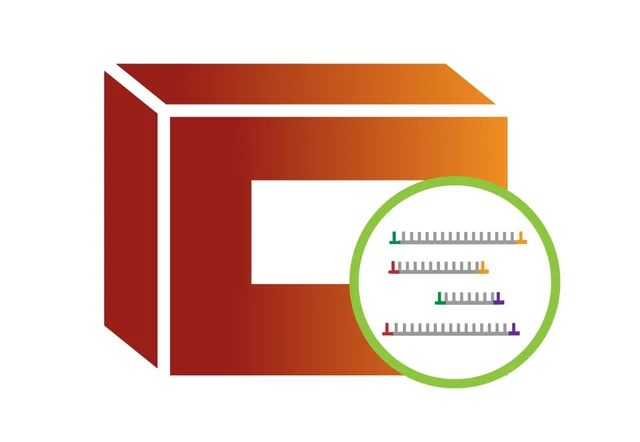
Most bias in small RNA libraries arises when two adapters are ligated to the 3′ and 5′ ends. Ligation efficiency depends on the sequence, so some molecules are much less likely to make it into the library. According to the manufacturer, standard workflows can under-represent some small RNAs by as much as 10,000-fold.
RealSeq uses a single adapter and circularises the adapter-ligated RNA, which greatly reduces ligation bias. The manufacturer published the method in Genome Biology (2018) and the RiboMarker® kit in RNA (2026).
RiboMarker® adds an RNA pretreatment step before ligation.
A single adapter and circularisation instead of ligating two adapters whose efficiency depends on the sequence.
Adapter dimers are removed with RealSeq® Beads magnetic beads. There is no need to cut the library from a gel.
RealSeq®-Biofluids works with as little as 50 µl of plasma. The RiboMarker® protocol includes a procedure for less than 100 pg of RNA.
Library data can be processed with tools designed for Illumina TruSeq Small RNA libraries.
The dual-index kits (RiboMarker®, RealSeq® Dual) offer up to 384 barcode combinations.
RiboSpike in the RiboMarker® kit is used for normalisation and workflow quality control.
The kits come in 12- and 48-reaction pack sizes and prepare libraries for Illumina sequencers. They are for research use only (RUO).
Small RNAs and lncRNA, mRNA and tRF/tDR fragments in a single reaction. For biofluids, tissues and environmental samples. Dual index for up to 384 samples, RiboSpike included.
Small RNA libraries (15–35 nt) from tissue and cell RNA. Input 1–1,000 ng total RNA; 100 ng and RIN above 7 recommended. Single index, 48 barcodes.
Small RNA libraries (15–35 nt) from biofluids and other samples with low RNA concentration. The protocol is optimised for RNA from 200 µl of plasma. Single index. Not suitable for heparin plasma.
Small RNA libraries (15–35 nt) from tissues, cells and biofluids. Input 1 ng – 1 µg total RNA. Combinatorial dual index for up to 384 samples.
Barcoded PCR primer sets with 12 barcodes per set. For laboratories that need additional barcodes.
Liquid biopsy and biomarker discovery for early cancer detection and treatment monitoring.
Biomarkers of infections caused by fungi, viruses, bacteria and parasites.
Circulating miRNA and cfRNA from plasma, serum, urine, whole blood, saliva or cerebrospinal fluid, as well as extracellular vesicles and exosomes.
Plant and animal genetics, plant small RNAs including phasiRNAs, and soil microbiota profiling.
We will help you choose a kit based on sample type, amount of RNA and number of samples. We represent RealSeq in the Czech Republic, Slovakia and Poland. Consultations are non-binding.